
Scroll down for more detailed information!
If you want to hear about the product, click the "Listen" button"
DISCLAIMER / disclaimer
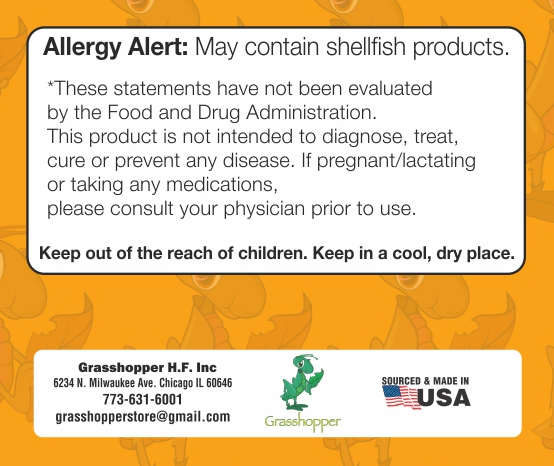
Dietary supplements are not medicines and are not intended to diagnose, treat, or prevent any disease. They cannot be considered a substitute for medical treatment or medications prescribed by a doctor.
All information presented here is for educational and informational purposes only. It does not constitute medical advice, a diagnosis, or an individual treatment recommendation.
Each person makes the decision to use dietary supplements at their own responsibility. Before starting supplementation, especially in the case of chronic illnesses, pregnancy, breastfeeding, or taking medications, consult a doctor. or another qualified healthcare professional.
For additional information regarding your own health condition, possible contraindications, drug interactions, and the proper use of supplements, consult your doctor.
What is astaxanthin?
Astaxanthin is a carotenoid, i.e. a pigment that gives a red hue.
Carotenoids are not only about colour, but above all about their
antioxidant properties, i.e. the ability to neutralise free radicals that damage
cell membranes, tissues and organs of living organisms.
Astaxanthin – the universal key to health
There are many different ways of measuring the antioxidant strength of a given substance. One
of the most popular is the method known as Oxygen Radical Absorbance Capacity,
abbreviated as ORAC, developed by Brunswick Laboratories in Norton, Massachusetts
Massachusetts.
According to Brunswick Laboratories, the ORAC test is not an ideal method for measuring
the properties of carotenoids such as astaxanthin, because they are soluble in
fats.
The degree of astaxanthin's antioxidant properties was therefore measured using two
other, alternative methods. In both experiments, astaxanthin left
far behind all known antioxidants.
Astaxanthin – a natural remedy for inflammation
In the case of chronic inflammation, especially in the joints, rheumatism, or
carpal tunnel syndrome, called in English carpal tunnel syndrome, people
most often reach for aspirin or Tylenol.
Meanwhile, it is known that aspirin can cause bleeding from the gastrointestinal tract
of the digestive system, whereas excessive use of Tylenol may damage the liver.
To effectively eliminate pain, so-called inflammatory factor inhibitors were developed
COX-2, that is, pharmaceutical drugs known as Vioxx or Celebrex.
We know, however, that these medications can also cause serious side effects, including
heart problems.
Patients aware of the possible side effects turn to other methods, among
others for glucosamine and chondroitin.
It is known that ultraviolet rays cause premature aging
of the skin, the formation of wrinkles, dry skin, and the development of brown spots and
freckles.
Natural astaxanthin not only helps protect the skin from damage
caused by ultraviolet radiation, but may also support
reversing the external signs of skin aging.
And all this through natural action from within.
Astaxanthin – the universal key to health – is available in its natural
figures at the Field Cricket’s, where illness disappears.
Read more!
Many of us are looking for a universal remedy to lower cholesterol or blood sugar levels, relieve joint pain or severe rheumatic ailments.
We all long for a pill that ensures youth, an alert and well-functioning brain, healthy eyes, and an efficient nervous system. There are many different types of preparations on the market, both less and more expensive. Nevertheless, almost everyone continues searching for that one magic pill that would solve all problems at once.
Unfortunately, no such pill exists—at least it has not been invented yet. However, Mother Nature has something of a consolation prize for us. It is an extraordinary red substance that gives people strength, energy, and youthfulness. It supports brain health, good eyesight, natural protection against harmful sunlight, and creates a kind of protective armor against various types of inflammation, both in the veins and arteries and in the joints.
This natural red substance is astaxanthin – a universal key to health.
Have you ever seen a salmon swimming upstream against the current of a rushing river and leaping up a waterfall? Salmon are not small fish. Nevertheless, in the majesty of a waterfall, swimming upstream for nearly seven days seems absolutely impossible.
And yet, during certain periods of their lives, salmon swim upstream for as long as seven days without stopping.
Let's look at this phenomenon from a human perspective. It's as if a man standing one meter and eighty centimeters tall swam nonstop for seven days through ten-meter-high waves to reach a place one hundred miles away from his starting point.
How is it possible that a salmon can accomplish such a heroic, athletic feat?
The answer to this question is: natural astaxanthin.
Astaxanthin is found in very high concentrations in the bodies of animals, particularly in salmon muscles. Each of us has experienced the phenomenon of so-called muscle soreness at least once in our lives. It is known that intense exercise causes a very large number of oxidation processes in our muscles.
Thanks to the accumulation of a huge amount of natural astaxanthin in salmon muscles, the effects of oxidation are naturally neutralized. That is why salmon are capable of accomplishing something that seems almost impossible.
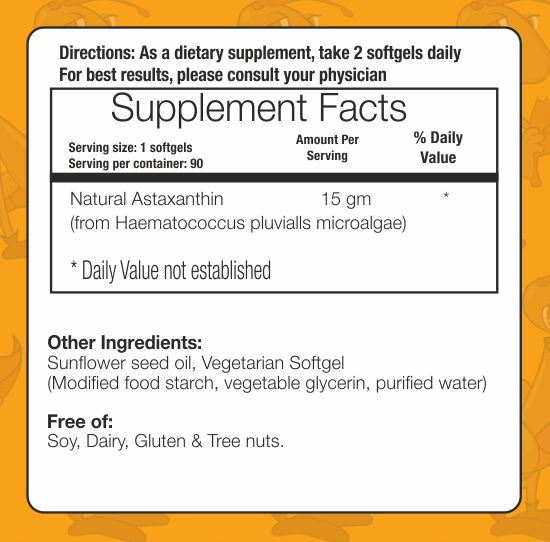
This certainly does not mean that one should eat a bottle of astaxanthin and then swim from New York to Paris. However, it is important to realize that humans need only four to eight milligrams of natural astaxanthin per day to support the body's strength and health.
There is a sport discipline that can be described as the competition of a triple athlete. Those wishing to earn the title of triple athlete must meet, as the name suggests, three conditions.
They must be able to swim four kilometers without stopping, cycle one hundred and eighty kilometers, and run a marathon forty-two kilometers long.
There are many people who have succeeded in these disciplines. One of them is Max Burdick.
Why are we talking about him?
Because his dream was to earn the title of triple athlete. There might not have been anything particularly remarkable about that, if not for the fact that Max Burdick earned this title at the age of seventy-eight.
Even more interestingly, until he turned seventy-five, he had not managed to achieve the required result in all three disciplines. That was when he learned about astaxanthin and began supplementing with just two capsules a day.
At the age of seventy-eight, he managed to swim four kilometres, cycle one hundred and eighty kilometres, and run a forty-two-kilometre marathon.
Congratulations! However, astaxanthin means much more than just extra power for athletes.
Anyone who takes this substance may notice higher energy levels, greater strength, and endurance. This applies equally to a person doing physical work and to a busy businessman or businesswoman.
What is astaxanthin?
Astaxanthin is a carotenoid, meaning a pigment that gives a red hue. However, carotenoids are not just about color; above all, they are known for their antioxidant properties, i.e. their ability to neutralize free radicals that damage cell membranes, tissues, and organs of living organisms.
All carotenoids, both those found in carrot juice and lycopene found in tomatoes, exhibit antioxidant properties. However, due to its exceptional antioxidant strength, astaxanthin has been called the king of carotenoids.
Astaxanthin is found in both animal and plant organisms around the world. It occurs in the greatest amounts in algae, phytoplankton, and certain types of fungi.
Marine animals that are pink or red in color contain natural astaxanthin. These include salmon, crabs, lobsters, and shrimp.
These animals eat krill, plankton, and other organisms containing natural astaxanthin. Bears and humans, in turn, eat these marine creatures, thereby obtaining a valuable source of astaxanthin.
Astaxanthin – the universal key to health
There are many different ways to measure the antioxidant strength of a given substance. One of the most popular is the method known as Oxygen Radical Absorbance Capacity, abbreviated as ORAC, developed by Brunswick Laboratories in Norton, Massachusetts.
According to Brunswick Laboratories, the ORAC test is not an ideal way to measure the properties of carotenoids such as astaxanthin, because they are fat-soluble.
The degree of astaxanthin's antioxidant properties was therefore measured using two other alternative methods. In both experiments, astaxanthin left all known antioxidants far behind.
In the first experiment, it turned out that astaxanthin's antioxidant properties are five hundred and fifty times stronger than the antioxidant properties of vitamin E.
The comparison of astaxanthin with beta-carotene, an antioxidant belonging to the same family of carotenoids, also proved extremely interesting.
Beta-carotene has been studied in many possible ways over the past decades. It is known to be necessary for our health because the body produces vitamin A from carotenoids.
However, it turns out that in terms of antioxidant capacity, astaxanthin is eleven times more powerful than beta-carotene. It is not without reason that it has been called the king of carotenoids.
Another carotenoid is lutein, known to everyone who takes it to maintain good eyesight. There is no doubt that lutein supports eye health.
However, astaxanthin has also surpassed it in this respect. It turns out that, in terms of protecting the eyes from damage caused by free radicals, astaxanthin is three times stronger than lutein.
Speaking of comparing results, it is worth noting the extremely important difference between the effects of natural and synthetic astaxanthin.
Many companies are already producing synthetic astaxanthin, realizing what great hope it may offer to sick people and to healthy individuals who want to preserve their health.
Synthetic astaxanthin is produced by chemical companies in laboratories, using various petrochemical substances.
Although synthetic astaxanthin has the same chemical formula as natural astaxanthin, it is in fact a different molecule; more precisely, it has a different molecular shape.
In nature, astaxanthin is usually bound to a fatty acid. The fatty acid is attached to the end of the astaxanthin molecule. Technically speaking, it is an esterified molecule. This makes natural astaxanthin more stable and effective.
There is also a second, much more important aspect in favor of natural astaxanthin.
Natural astaxanthin is extracted from a type of microalgae. More precisely, these are microalgae called Haematococcus pluvialis.
It is a genus of extremely delicate algae. Even a slight change in water temperature can begin to adversely affect their functioning.
This is why this type of microalgae accumulates large amounts of astaxanthin as a mechanism enabling survival in unfavourable conditions.
Large amounts of astaxanthin serve these algae as a kind of force field or protective shield. It helps them survive despite a lack of nutrients, unsuitable water temperatures, or excessively intense sunlight.
Algae that seemingly cannot live without water can survive in a dormant state, protected by astaxanthin, for more than forty years.
I repeat: without food and without water. Even in harsh sunlight and even in winter cold.
When favorable conditions return, the algae regain their normal, green, and vibrant state.
Returning to the comparison of synthetic and natural astaxanthin, it should first of all be understood that when astaxanthin is extracted from microalgae, these algae, in order to further ensure the survival of their species, produce other supporting carotenoids alongside astaxanthin.
As is well known, the synergistic effect of beta-carotene, canthaxanthin, lutein, and astaxanthin will always be stronger and more lasting than the effect of a single synthetic antioxidant.
However, let us return to the most important matter, namely the question of why astaxanthin has been called the king of carotenoids.
In addition to everything we have already said, natural astaxanthin is capable of doing something that other carotenoids cannot.
Neither beta-carotene, nor lutein, nor other known carotenoids are able to cross the blood-brain barrier to the same extent in order to directly reach the brain, eyes, and central nervous system.
This aspect is extremely important because, as research indicates, eye diseases and various types of disorders that impair proper vision may be linked to an excessive amount of free radicals in these areas.
The inability to remove their excess from these particular areas causes the diseases to progress.
Macular degeneration, glaucoma, and vision loss resulting from diabetes are associated, among other things, with the presence of large amounts of free radicals that are difficult to remove from there, because only certain antioxidants are able to cross the blood–brain barrier.
Astaxanthin is one such substance.
Astaxanthin does not normally occur in large amounts in or around the eye. Nevertheless, Dr. Mark Tso was one of the first scientists who, in 1996, proved that astaxanthin can cross certain barriers in the body.
He administered astaxanthin to rats and then, using special reagents, detected it in their eyes.
He then showed that rats given astaxanthin maintained good eyesight despite undergoing experimental procedures intended to impair it.
This is extremely valuable information, as most people with poor eyesight supplement with lutein.
Meanwhile, lutein, although it is a carotenoid like astaxanthin, has weaker antioxidant activity and does not reach all areas of the body in the same way as astaxanthin, which may help protect the eyes from an excessive amount of damaging free radicals.
Astaxanthin – a natural remedy for inflammation
In cases of chronic inflammation, especially in the joints, rheumatism, or carpal tunnel syndrome, called in English carpal tunnel syndrome, people most often turn to aspirin or Tylenol.
Meanwhile, it is known that aspirin can cause gastrointestinal bleeding, while excessive use of Tylenol can damage the liver.
To effectively eliminate pain, so-called COX-2 inflammatory factor inhibitors were developed, pharmaceutical drugs known as Vioxx or Celebrex.
However, we know that these drugs can also cause serious side effects, particularly heart problems.
Patients aware of the possible side effects turn to other methods, including glucosamine and chondroitin.
However, these preparations do not always produce the desired results, especially when glucosamine and chondroitin are taken in tablet form. They may be difficult to digest, particularly for people with low levels of digestive enzymes.
As is known, enzyme levels may decrease with age, especially if a person does not consume an adequate amount of fresh vegetables and fruits rich in natural enzymes.
In such cases, glucosamine and chondroitin in tablet form may be less well absorbed by the body.
What, then, should a person suffering from inflammation of the joints or tendons do?
The answer is: try natural astaxanthin.
However, one thing should be noted here. First and foremost, it must be understood that astaxanthin will not work as quickly or as strongly as a painkiller. Fortunately, however, it is a natural substance and is considered safe when used in appropriate amounts.
According to the cited observations, approximately twenty-five percent of people feel a noticeable difference after two to four weeks of regular astaxanthin intake.
Eighty percent of people taking astaxanthin in cases of osteoarthritis or rheumatoid arthritis stated that supplementation resulted in improvement.
Eighty percent of the two hundred and forty-seven people studied reported a noticeable improvement.
Astaxanthin taken in standard amounts is generally well tolerated. At very high doses, meaning more than twelve milligrams per day, the skin of the hands and the soles of the feet may take on a more orange color.
This is not considered harmful, but it may be a noticeable change.
The pigment contained in astaxanthin can accumulate in the skin, which means that the body is saturated with it. Astaxanthin accumulated in the skin may also increase its natural resistance to sunlight.
In this way, instead of covering the entire skin with chemicals, we can support its natural protection from within.
It is known that ultraviolet rays cause premature skin aging, the formation of wrinkles, dry skin, and the development of brown spots and freckles.
Natural astaxanthin not only helps protect the skin from damage caused by ultraviolet radiation, but may also support the reversal of external signs of skin aging.
And all this through natural action from within.
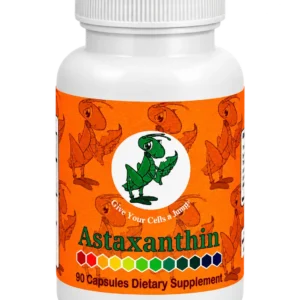
Astaxanthin – a universal key to health – is available in its natural form at Polny Konik, where illness disappears.
Reviews
There are no reviews yet.