
Scroll down for more detailed information!
If you want to hear about the product, click the "Listen" button"
DISCLAIMER / disclaimer
Dietary supplements are not medicines and are not intended to diagnose, treat, or prevent any disease. They cannot be considered a substitute for medical treatment or medications prescribed by a doctor.
All information presented here is for educational and informational purposes only. It does not constitute medical advice, a diagnosis, or an individual treatment recommendation.
Each person makes the decision to use dietary supplements at their own responsibility. Before starting supplementation, especially in the case of chronic illnesses, pregnancy, breastfeeding, or taking medications, consult a doctor. or another qualified healthcare professional.
For additional information regarding your own health condition, possible contraindications, drug interactions, and the proper use of supplements, consult your doctor.
Read more!
It is hard to believe that a creature as small as krill can matter so much. These tiny crustaceans gather in vast swarms in the cold waters of the ocean. They feed on phytoplankton and, in turn, provide food for whales, seals, penguins, and many other animals. Much of the life in the seas surrounding Antarctica depends on them.
Krill has also attracted the attention of scientists who study human nutrition. The oil extracted from it contains the omega-3 fatty acids EPA and DHA, phospholipids, and astaxanthin. This natural combination prompted researchers to take a closer look. Over time, krill oil became the subject of studies involving blood lipids, joint discomfort, and premenstrual syndrome. It even figured in research on food for space travel.
Dr. Tina Sampalis and the Early Research
One of the people associated with the beginning of this story was Dr. Tina Sampalis. She helped develop Neptune Krill Oil, known as NKO, participated in patent work, and co-authored research into its potential uses. Her name deserves recognition. Behind the early interest in krill were researchers with ideas they sought to test.
The presence of omega-3s alone was not what caught their attention. EPA and DHA are also found in fish. What made krill oil intriguing was the form in which these fatty acids occur, alongside other natural components: phospholipids, phosphatidylcholine, and astaxanthin.
Omega-3s and Their Phospholipid “Boats”
EPA and DHA are two well-studied omega-3 fatty acids. The body uses them, among other things, as components of cell membranes. DHA is an important constituent of nervous tissue, while EPA participates in processes involved in the body’s inflammatory response.
In krill oil, a substantial portion of EPA and DHA is bound to phospholipids. Phospholipids help form the membranes that surround our cells. We can picture them as little boats carrying omega-3s. The image conveys something distinctive about the structure of krill oil, although it should not be taken literally: the body must first digest and process the contents of a capsule.
This form of omega-3 has been studied extensively. We know that krill oil supplies the body with EPA and DHA. Some studies suggest that, at certain doses, absorption may compare favorably with that of particular forms of fish oil. Results are not consistent across all products, however. Rather than assuming that one krill oil capsule will always replace several fish oil capsules, it is worth checking the label for the actual amount of EPA and DHA in the daily serving.
Phosphatidylcholine, Choline, and the Nervous System
One of the notable phospholipids in krill oil is phosphatidylcholine. It forms part of cell membranes and provides choline. The body needs choline for several purposes, including the normal processing of fats in the liver and the production of acetylcholine.
Acetylcholine helps nerve cells transmit signals. It also plays a role in communication between nerves and muscles. It is easy to see why the presence of phosphatidylcholine drew researchers’ attention to the brain and nervous system.
That does not mean krill oil is a treatment for memory or concentration problems. It means that the oil contains a component with a well-established role in the body. The distinction matters. A useful description of a supplement should help people understand what it contains without attributing effects to it that have not been demonstrated.
What Gives the Oil Its Red Color?
Krill oil owes its characteristic reddish color to astaxanthin. This natural pigment belongs to the carotenoid family and is found in other marine organisms as well. Researchers have studied astaxanthin for its antioxidant properties.
Older promotional materials sometimes made striking comparisons, describing krill oil as many times “stronger” than certain vitamins or other antioxidants. Those figures came from specific laboratory tests. Such a test shows how a substance behaves under experimental conditions; it cannot tell us directly how much better a person will feel after taking a capsule.
What remains especially interesting is that astaxanthin occurs in krill oil alongside omega-3s and phospholipids. Together, these components give the oil its distinctive composition and appearance.
Why Was the Same Oil Sold Under Different Descriptions?
People who remember the early days of krill oil may recall something curious. One package focused on joints and the body’s inflammatory response. Another addressed women’s comfort before menstruation. Others emphasized the heart, brain, or eyes. Sometimes these different descriptions referred to very similar oil—or even the same oil.
The reason lies in the different lines of research involving its components. EPA and DHA were studied in relation to blood lipids and other processes in the body. Phospholipids attracted the interest of researchers studying cell membranes. Phosphatidylcholine led to questions about choline and the nervous system. Manufacturers then chose the theme that best suited each product’s intended audience.
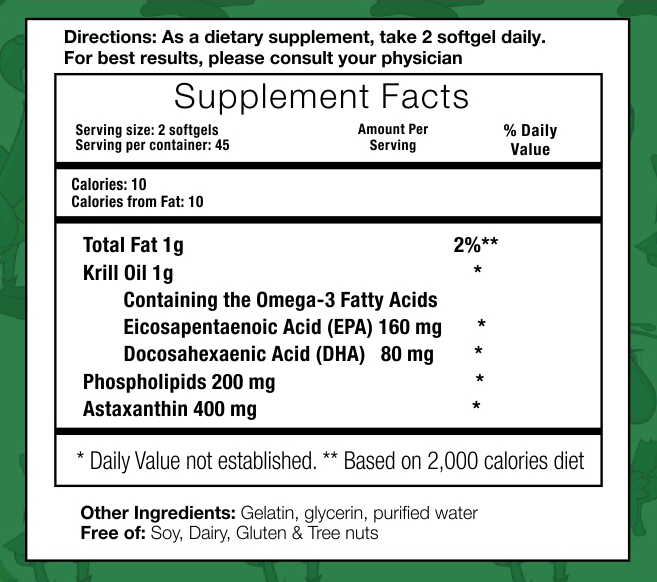
There is a useful lesson here for shoppers: a claim on the front of a box does not necessarily mean it contains a different kind of krill oil. The Supplement Facts label tells a fuller story, including the amounts of oil, EPA, DHA, and phospholipids in each serving.
Krill Oil and Premenstrual Syndrome
One study that brought krill oil wider attention was co-authored by Dr. Tina Sampalis and examined premenstrual syndrome, or PMS, and menstrual pain. Seventy women participated. Over several menstrual cycles, researchers compared Neptune Krill Oil with fish oil. The participants assessed their symptoms, and the researchers also examined their use of pain relievers.
The authors reported favorable results in the krill oil group. This helps explain why packages and promotional materials began presenting krill oil as a supplement for women. The size of the study matters, however. A result observed in a group of participants does not promise the same outcome for every woman. Severe or newly developed menstrual symptoms call for appropriate medical evaluation.
Joints, CRP, and Blood Test Results
Researchers also studied Neptune Krill Oil in relation to joint discomfort and C-reactive protein, or CRP, a substance measured in the blood. In one early study, the authors reported favorable changes in some of the measures assessed among people taking krill oil. This contributed to interest in krill oil for joint health and the body’s inflammatory response.
A separate line of research looked at cholesterol and triglycerides. Early publications reported large percentage changes in LDL, HDL, and other measures. Those were results from particular studies, not changes that every customer should expect. Later analyses combining multiple clinical trials suggested that krill oil may have a beneficial effect on certain blood lipid measures. They did not, however, establish a consistent, clear advantage over fish oil in this respect.
The early findings remain an interesting part of krill oil’s history. They are best understood alongside what subsequent research has taught us.
Krill Oil and Food for Astronauts
The story of krill oil also reached the field of space food research. Neptune Technologies entered into a partnership with the NASA Food Technology Commercial Space Center, an organization concerned with food technologies that could be useful, among other things, during space travel. The interest centered on krill oil’s nutritional properties and its possible use in developing food products.
It is a remarkable connection: a crustacean from the cold ocean and researchers considering how to nourish people beyond Earth. The documented partnership does not, however, establish that krill oil capsules became a standard part of the supplies aboard the International Space Station. The research story is compelling on its own.
Quality, Freshness, and Ease of Use
When choosing a krill oil, it is worth looking beyond its omega-3 content. The quality of the raw material, testing for contaminants, the freshness of the oil, and the way the capsules are protected all matter. EPA and DHA are fats that can oxidize, so exposure to oxygen during production and storage should be carefully controlled.
Manufacturers use sealed capsules and various methods to protect their contents; some technologies employ a protective atmosphere. The shelf life of any particular product depends on its manufacturing process, quality testing, and storage conditions. A well-sealed capsule is important, but it is no substitute for checking the oil’s freshness.
Everyday comfort matters, too. Some fish oils leave an unpleasant fishy taste when a person burps after taking them. Some people find krill oil easier to take in this respect, although experiences vary from person to person and from product to product. If a supplement is to become part of a regular routine, such a practical detail can make a real difference.
At Grasshopper Healthy Family, we believe choosing a krill oil should begin with a few straightforward questions: What is actually in the capsule? How has the quality of the oil been protected? Is the product comfortable to take day after day? That is why we encourage customers to read the complete label, not just the promise printed on the front of the package.
What Can You Expect from a Supplement?
Krill oil has a rich and interesting composition. It provides EPA and DHA together with phospholipids, including phosphatidylcholine, and astaxanthin. It can be a useful way to supplement the diet, especially when fish is seldom on the menu. A regular supply of nutrients gives the body access to them as it carries out its normal functions.
Krill oil is not a medicine or a treatment for PMS, joint disease, memory problems, or any other medical condition. A supplement can help provide nutrients the body needs, but it cannot replace an evaluation of symptoms, prescribed treatment, or a healthy diet. Any effect also depends on the dose, a person’s health, and their overall eating habits.
That is why the story of krill oil is most compelling when told without exaggeration. This small ocean creature provides a remarkable combination of nutrients. Dr. Tina Sampalis and other researchers helped show why it was worth studying. Today, we can choose krill oil with a clearer understanding of its potential: appreciating its composition, checking the quality of the product, and recognizing the difference between supporting the body and treating a disease.
Reviews
There are no reviews yet.