
Scroll down for more detailed information!
If you want to hear about the product, click the "Listen" button"
DISCLAIMER / disclaimer
Dietary supplements are not medicines and are not intended to diagnose, treat, or prevent any disease. They cannot be considered a substitute for medical treatment or medications prescribed by a doctor.
All information presented here is for educational and informational purposes only. It does not constitute medical advice, a diagnosis, or an individual treatment recommendation.
Each person makes the decision to use dietary supplements at their own responsibility. Before starting supplementation, especially in the case of chronic illnesses, pregnancy, breastfeeding, or taking medications, consult a doctor. or another qualified healthcare professional.
For additional information regarding your own health condition, possible contraindications, drug interactions, and the proper use of supplements, consult your doctor.
Read more!
When Prostate Problems Keep You Up at Night
Go Prosta Go for Everyday Prostate Support
Waking up at night, heading to the bathroom, then going back to bed. Before long, it happens again. During the day, you may notice a weaker urine stream, difficulty starting, or the feeling that your bladder has not emptied completely. Sometimes there is discomfort in the lower abdomen or the perineum, the area between the scrotum and anus. In other cases, there is no noticeable pain, but an elevated PSA test result raises concerns.
Prostate problems can cause similar symptoms even when their underlying causes differ. Understanding those differences can help you make informed decisions about your health and choose appropriate support.
Prostate Enlargement, Inflammation, and Elevated PSA
The prostate is a gland located below the bladder that surrounds the first part of the urethra, the tube that carries urine out of the body. It produces some of the fluid in semen. Its location explains why an enlarged prostate can restrict urine flow and why inflammation can cause pain and irritation.
Benign prostatic hyperplasia, or BPH, is a noncancerous enlargement of the prostate associated with aging, hormonal changes, and processes within the gland itself. An enzyme called five-alpha reductase plays an important role. It converts testosterone into DHT, or dihydrotestosterone, a hormone that strongly promotes prostate tissue overgrowth.
The issue is more complex than simply having an elevated level of this enzyme. Its activity within tissues, the gland’s sensitivity to hormones, and other processes, including inflammation, also matter. As the prostate enlarges, it may compress the urethra, forcing the bladder to work harder to push urine through.
Prostatitis, or inflammation of the prostate, can be caused by a bacterial infection. Another condition, chronic pelvic pain syndrome, can involve inflammation, muscle tension, and changes in how the nervous system processes pain. Perineal pain, burning, or discomfort after ejaculation therefore calls for a broader assessment than simply assuming the prostate is enlarged.
An elevated PSA level is a test finding that needs to be interpreted in context. PSA, or prostate-specific antigen, is a protein produced by the prostate. Its level can rise with benign enlargement, inflammation, or cancer. The test result alone does not establish the cause.
According to the National Cancer Institute, part of the National Institutes of Health, or NIH, ejaculation and vigorous physical activity, such as cycling, can temporarily raise PSA levels. Patients are generally advised to avoid ejaculation and vigorous cycling for forty-eight hours before the blood draw.
A persistently elevated PSA level should not be attributed solely to sex or cycling. Review the circumstances surrounding the blood draw, discuss the result with your clinician, and repeat the test if advised.
Who Is Go Prosta Go For
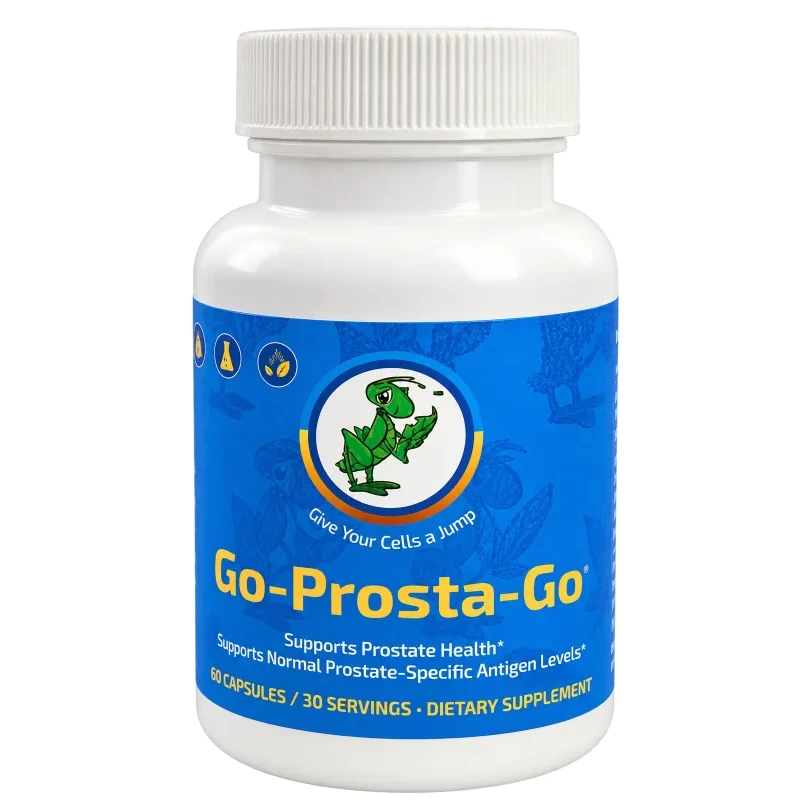
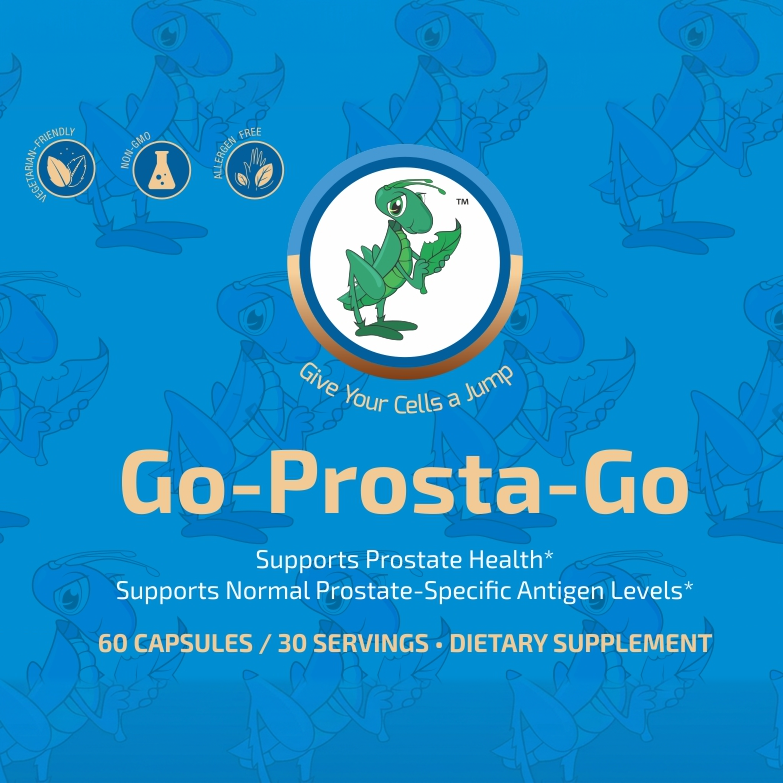
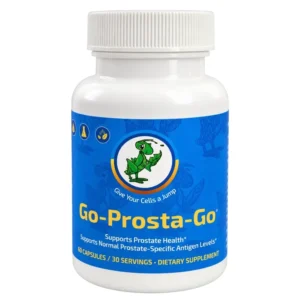
Go Prosta Go by Grasshopper is a dietary supplement that combines ingredients that support healthy prostate function.
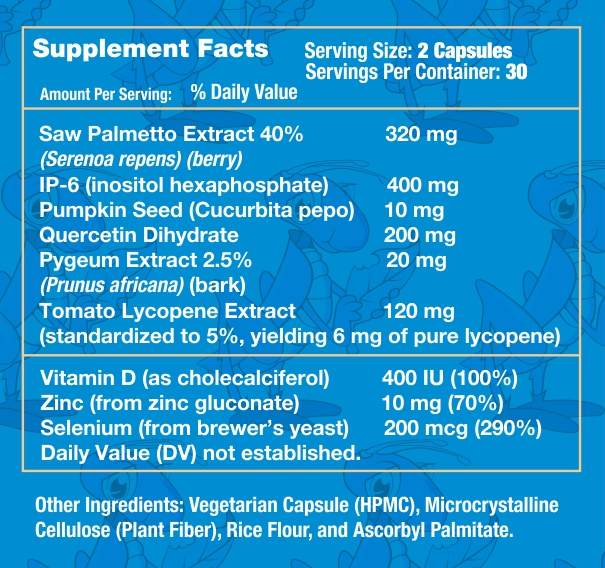
It contains saw palmetto, pygeum, quercetin, lycopene, IP six, pumpkin seed, zinc, selenium, and vitamin D three.
The rationale behind this formula becomes clearer when we examine how its individual ingredients work.
Saw Palmetto and the Conversion of Testosterone to DHT
Saw palmetto is one of the best-known ingredients in supplements formulated for prostate health.
Its extracts contain fatty acids, among other compounds. In laboratory studies, some of these fatty acids inhibited the activity of five-alpha reductase, the enzyme that converts testosterone into DHT.
Lower enzyme activity means less conversion of testosterone into DHT, a hormone involved in male pattern hair loss and prostate enlargement.
Go Prosta Go provides 320 mg of saw palmetto extract per two-capsule serving.
Quercetin, Inflammation, and Persistent Discomfort
Quercetin is a flavonoid, a plant compound found in foods such as onions and apples. Its relevance to prostate health involves its effects on inflammatory processes and oxidative stress, which occurs when reactive compounds place excessive stress on cells.
In a clinical trial, 67% of the evaluated participants who took quercetin experienced an improvement in symptom scores of at least 25% percent.
Go Prosta Go contains 200 milligrams of quercetin dihydrate per serving.
Pygeum, Inflammatory Mediators, and Urination
An extract of the bark of the African cherry tree, Prunus africana, is commonly known as pygeum.
One mechanism studied is its effect on leukotriene production. Leukotrienes are substances that promote inflammatory signals and attract immune cells. In an experiment involving human immune cells, pygeum extract reduced leukotriene production by inhibiting the five-lipoxygenase pathway. Five-lipoxygenase is an enzyme involved in the formation of certain leukotrienes. This may help explain some of the extract’s anti-inflammatory activity.
Go Prosta Go provides 20 mg of pygeum extract as part of its botanical blend.
Why Zinc Matters for the Prostate
Zinc plays a distinctive role in prostate physiology. The gland’s secretory cells accumulate high levels of zinc and produce large amounts of citrate, a component of prostatic fluid.
Zinc slows down an enzyme called mitochondrial acronitase which normally breaks down citrate. With that break applied, prostate cells can keep more citrate and can release it into seminal fluid. Citrate is an important seminal fluid helping maintain the chemical environment needed for normal reproductive function.
Go Prosta Go provides 10 milligrams of zinc as zinc gluconate.
Pumpkin Seed in Nutrition and Research
Pumpkin seeds supply fats, phytosterols, and minerals. Phytosterols are plant compounds with a structure similar to cholesterol. Their presence is one reason pumpkin seeds and pumpkin-derived preparations have attracted interest in men’s health.
Go Prosta Go contains 10 mg of pumpkin seed per serving.
How Lycopene Provides Antioxidant Protection
Lycopene is the red pigment in tomatoes. Its molecular structure allows it to absorb energy from a highly reactive form of oxygen called singlet oxygen and dissipate that energy. This reduces the potential for reactions that can damage cellular components.
Go Prosta Go contains 120 milligrams of tomato extract standardized to five percent lycopene, providing 6 milligrams of lycopene. It serves as an antioxidant ingredient in the formula.
IP6, Metal Binding, and Immune Support
IP six, or inositol hexaphosphate, occurs naturally in seeds, grains, and legumes.
Go Prosta Go provides 400 milligrams of IP6.
Selenium and the Enzymes That Protect Cells
Selenium is a component of enzymes that include glutathione peroxidases. These enzymes help convert peroxides, reactive compounds that can damage cells, into less reactive substances.
Go Prosta Go provides 200 micrograms of selenium from brewer’s yeast. This is a substantial amount, so selenium from any other supplements you take should also be considered.
Vitamin D3 and the Regulation of Cellular Processes
After conversion to its active form, vitamin D3 acts through a receptor that regulates gene expression, the process by which cells use the instructions encoded in their genes. Its functions include helping regulate calcium balance and supporting immune function.
Go Prosta Go provides 400 I.U. equivalent to ten micrograms, of vitamin D3.
Go Prosta Go Product Use and Safety Information
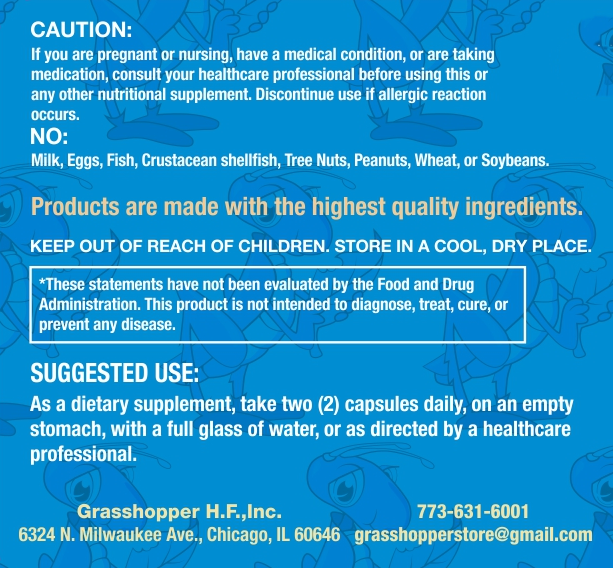
No dietary supplement is a medicine for treating disease. Go Prosta Go is intended to supplement the diet and is not intended to diagnose, treat, cure, or prevent any disease. It does not replace a balanced diet, a healthy lifestyle, medical advice, or prescribed medication. Statements about this product have not been evaluated by the U.S. Food and Drug Administration, or FDA.
If you take medication, have a chronic medical condition, or use several supplements, review the ingredients with a qualified healthcare professional. Do not exceed the recommended serving. Keep out of reach of children.
An inability to urinate, blood in the urine, severe pain, or fever accompanied by urinary symptoms requires urgent medical attention.
Sources and Publications
National Cancer Institute, NIH: Prostate-Specific Antigen (PSA) Test. Causes of elevated PSA and preparation for testing.
National Cancer Institute, NIH: Prostate Cancer Screening (PDQ). PDQ is the name of the institute’s cancer information database. Interpretation of PSA results and the effects of a digital rectal examination.
National Institute of Diabetes and Digestive and Kidney Diseases, NIDDK, part of NIH: Prostate Problems. Prostate enlargement, inflammation, and related symptoms.
Determination of the potency of a novel saw palmetto supercritical CO₂ extract (SPSE) for 5α-reductase isoform II inhibition using a cell-free in vitro test system. Phytomedicine, two thousand sixteen. Laboratory inhibition of five-alpha reductase by a specific saw palmetto extract.
National Center for Complementary and Integrative Health, NCCIH, part of NIH: Benign Prostatic Hyperplasia and Complementary and Integrative Approaches. Assessment of research on saw palmetto and pygeum.
Shoskes and colleagues: Quercetin in men with category III chronic prostatitis: a preliminary prospective, double-blind, placebo-controlled trial. Urology, nineteen ninety-nine. A clinical trial of quercetin in chronic pelvic pain syndrome.
Meng and colleagues: Quercetin protects against chronic prostatitis in rat model through NF-κB and MAPK signaling pathways. The Prostate, two thousand eighteen. Anti-inflammatory mechanisms in an animal model.
Effect of Pygeum africanum extract on A23187-stimulated production of lipoxygenase metabolites from human polymorphonuclear cells. Nineteen ninety-four. Laboratory effects of pygeum extract on inflammatory mediators.
Pygeum africanum for the treatment of patients with benign prostatic hyperplasia: a systematic review and quantitative meta-analysis. The American Journal of Medicine, two thousand. A review of studies on symptoms and urine flow.
Costello and colleagues: Zinc inhibition of mitochondrial aconitase and its importance in citrate metabolism of prostate epithelial cells. Journal of Biological Chemistry, nineteen ninety-seven. The role of zinc in citrate metabolism.
Effects of pumpkin seed in men with lower urinary tract symptoms due to benign prostatic hyperplasia in the one-year, randomized, placebo-controlled GRANU study. Urologia Internationalis, two thousand fifteen. A one-year study of pumpkin seed and pumpkin seed extract.
Di Mascio, Kaiser, and Sies: Lycopene as the most efficient biological carotenoid singlet oxygen quencher. Nineteen eighty-nine. The biochemical mechanism of lycopene’s action.
Phytic acid. A natural antioxidant. Nineteen eighty-seven. Iron binding and the antioxidant properties of IP six.
NIH Office of Dietary Supplements: Zinc, Selenium, and Vitamin D. The physiological functions of these nutrients.
NIH Office of Dietary Supplements: Mission and scope of activities, including standards for reliable information and independence from commercial interests.
Reviews
There are no reviews yet.