
Scroll down for more detailed information!
If you want to hear about the product, click the "Listen" button"
DISCLAIMER / disclaimer
Dietary supplements are not medicines and are not intended to diagnose, treat, or prevent any disease. They cannot be considered a substitute for medical treatment or medications prescribed by a doctor.
All information presented here is for educational and informational purposes only. It does not constitute medical advice, a diagnosis, or an individual treatment recommendation.
Each person makes the decision to use dietary supplements at their own responsibility. Before starting supplementation, especially in the case of chronic illnesses, pregnancy, breastfeeding, or taking medications, consult a doctor. or another qualified healthcare professional.
For additional information regarding your own health condition, possible contraindications, drug interactions, and the proper use of supplements, consult your doctor.
How does activated carbon differ from ordinary charcoal?
Activated carbon is produced through the controlled carbonization of organic material
organic, and then subjecting it to the action of steam, air or
appropriate gases at high temperature.
The activation process increases the porosity of the carbon and creates an extensive network of very
small cracks, channels, recesses and openings. This significantly increases
its adsorption surface area.


Powder, capsules or tablets?
Activated charcoal is available, among other forms, as a powder, in capsules, and
tablets.
The broadcast noted that tablets may contain additional substances
technological substances, such as starch and binding agents, which make it possible to form a
tablet. This means that the entire mass of the tablet does not consist solely of activated
charcoal.
Use of activated charcoal in poisoning
Activated charcoal is used in emergency medicine in certain cases
of acute poisoning with medicines or chemicals. However, it does not bind all
poisons and cannot be used in every case.
If serious poisoning is suspected, contact emergency medical services
or a poison control center and follow the staff's recommendations
medical.


Charcoal has traditionally been used for certain gastrointestinal ailments
such as bloating, diarrhoea, nausea, vomiting or a feeling of
indigestion.
Its action consists in binding some of the substances present in the digestive tract
It may bind compounds responsible for the formation of gases,
unpleasant odors and certain metabolic products of microorganisms.
Prolonged diarrhea, severe vomiting, high fever, blood in the stool, symptoms
of dehydration or intense abdominal pain may, however, indicate a problem
requiring more detailed identification.
Read more!
Forest. A shady, timeless abode of majestic trees. A place of invisible manifestations of life, mysterious sounds carried by the whispers of the wind and expressed in the age-old songs of entire generations of birds.
Among creeping small plants, shrubs and vines lies a blackened log. For many years, no spring has awakened it to life. It lies dead, although many trees younger than it have long since decomposed.
So why is this blackened tree still lying here and not undergoing the same fate as all the other fallen trees around it?
A tree lying on the ground begins to decompose very quickly. However, if it becomes charred as a result of a forest fire, the decomposition process slows down significantly. Parts of a charred tree will survive much longer than pieces of wood of the same size and species that died naturally.
The charring process not only delays the decomposition of wood. Its final product, charcoal, has special properties that have long been used by humans.
Activated charcoal can bind various chemical compounds and toxins present in the digestive tract to its surface. Its primary use is associated with its detoxifying effect, as its porous structure allows it to bind many substances.
It should be noted that charcoal works primarily through adsorption, rather than absorption. Therefore, it does not absorb substances into itself like a sponge, but binds them to its highly developed surface.
It can be said to act like a magnet that attracts specific chemical compounds. Substances bound to the carbon surface can then be removed from the digestive tract along with the stool.
Charcoal has been used in folk medicine for a very long time. Native Americans used it, among other things, for bloating, even before Europeans arrived on the continent.
However, the primary association with charcoal remains its use as an agent that binds certain poisons. Today, specially prepared activated charcoal is used in specific cases of poisoning.
How does activated carbon differ from ordinary charcoal?
Activated carbon is produced through the controlled carbonization of organic material, followed by exposure to steam, air, or suitable gases at high temperature.
The activation process increases the porosity of the charcoal and creates an extensive network of very fine cracks, channels, cavities, and openings. As a result, its adsorption surface area increases significantly.
A small amount of activated charcoal actually has an enormous internal surface area. It is thanks to this that charcoal particles can quickly bind specific chemical compounds present in the digestive tract.
The industrial process of activating charcoal was developed at the beginning of the twentieth century. Activation using steam makes charcoal much more porous than its regular, non-activated form.
For this reason, when choosing a product, it is important to check whether it actually contains activated charcoal rather than merely regular charcoal.
Powder, capsules or tablets?
Activated charcoal is available, among other forms, as powder, capsules, and tablets.
The broadcast pointed out that tablets may contain additional technological substances, such as starch and binding agents, which make it possible to form a tablet. This means that the entire mass of a tablet does not consist solely of activated charcoal.
Powdered and encapsulated preparations may contain a larger amount of activated charcoal itself in a single serving. However, the actual content should always be checked on the label of the specific product.
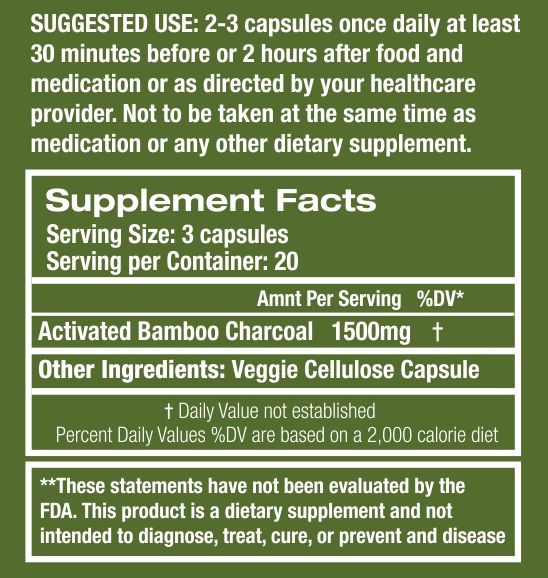
Preparations cannot be compared solely on the basis of the number of tablets or capsules. What matters most is the amount of charcoal stated in grams or milligrams, its quality, origin, and degree of activation.
Use of activated charcoal in poisoning
Activated charcoal is used in emergency medicine in certain cases of acute poisoning with medicines or chemicals. However, it does not bind all poisons and cannot be used in every case.
If serious poisoning is suspected, contact emergency medical services or a poison control center and follow the instructions of medical personnel.
Charcoal can also bind orally taken medicines to its surface and reduce their absorption. Therefore, an appropriately long interval should be maintained between taking charcoal and using medicines, supplements, or other oral preparations.
Activated charcoal and digestive complaints
Charcoal has traditionally been used for certain gastrointestinal complaints, such as bloating, diarrhoea, nausea, vomiting, or a feeling of indigestion.
Its action consists in binding some of the substances present in the gastrointestinal tract. It may bind compounds responsible for gas formation, unpleasant odours, and certain metabolic products of microorganisms.
However, prolonged diarrhea, severe vomiting, high fever, blood in the stool, symptoms of dehydration, or intense abdominal pain may indicate a problem requiring more thorough diagnosis.
Activated charcoal may also bind medications used for diabetes, so it should not be taken at the same time as oral insulin or other blood sugar-lowering medications. Charcoal itself does not replace the treatment prescribed for a person with diabetes.
External use of charcoal
In folk medicine, powdered charcoal was also used externally. It was added to poultices applied to the skin, including to areas that were oozing, irritated, suppurating, or emitting an unpleasant odor.
Charcoal can adsorb moisture, some odor-causing compounds, and various substances present on the surface of the skin. For this reason, it was used as an additive to dressings and poultices.
Open, deep, heavily suppurating, or long-lasting non-healing wounds require proper cleaning and monitoring to prevent the infection from spreading.
The broadcast also mentioned the use of charcoal compresses after a bee sting. A compress may be used as an adjunct in cases of a local skin reaction, swelling, and irritation.
If shortness of breath, swelling of the tongue or throat, severe weakness, dizziness, or widespread hives occur after a sting, this may indicate an anaphylactic reaction. In such a situation, it is necessary to call an ambulance immediately and administer adrenaline, in English epinephrine, most often administered in a single-use auto-injector.
In Poland, you will most often encounter the name EpiPen or EpiPen Junior. In the United States, it is also used EpiPen i EpiPen Jr., and other autoinjectors are also available, including Auvi-Q and generic versions of epinephrine.
It is used for anaphylaxis, that is, a severe allergic reaction, for example after a bee sting. It is administered intramuscularly into the outer part of the thigh. After use, call an ambulance immediately, because the effect of a single dose may be temporary and sometimes a second dose is needed.
So the easiest way to remember is:
Poland: adrenaline in an auto-injector, most commonly EpiPen.
USA: epinephrine auto-injector, most commonly EpiPen.
Activated charcoal in oral hygiene
Activated charcoal is also sometimes used for cleaning and whitening teeth. Thanks to its adsorptive properties, it can bind some of the substances responsible for surface discoloration and unpleasant breath.
Carbon-containing preparations come in the form of powders, pastes, and capsules, the contents of which can be used for cleaning teeth.
When using powdered charcoal, do not press the toothbrush too hard against the tooth surface. Gentle cleaning helps limit excessive enamel abrasion and gum irritation.
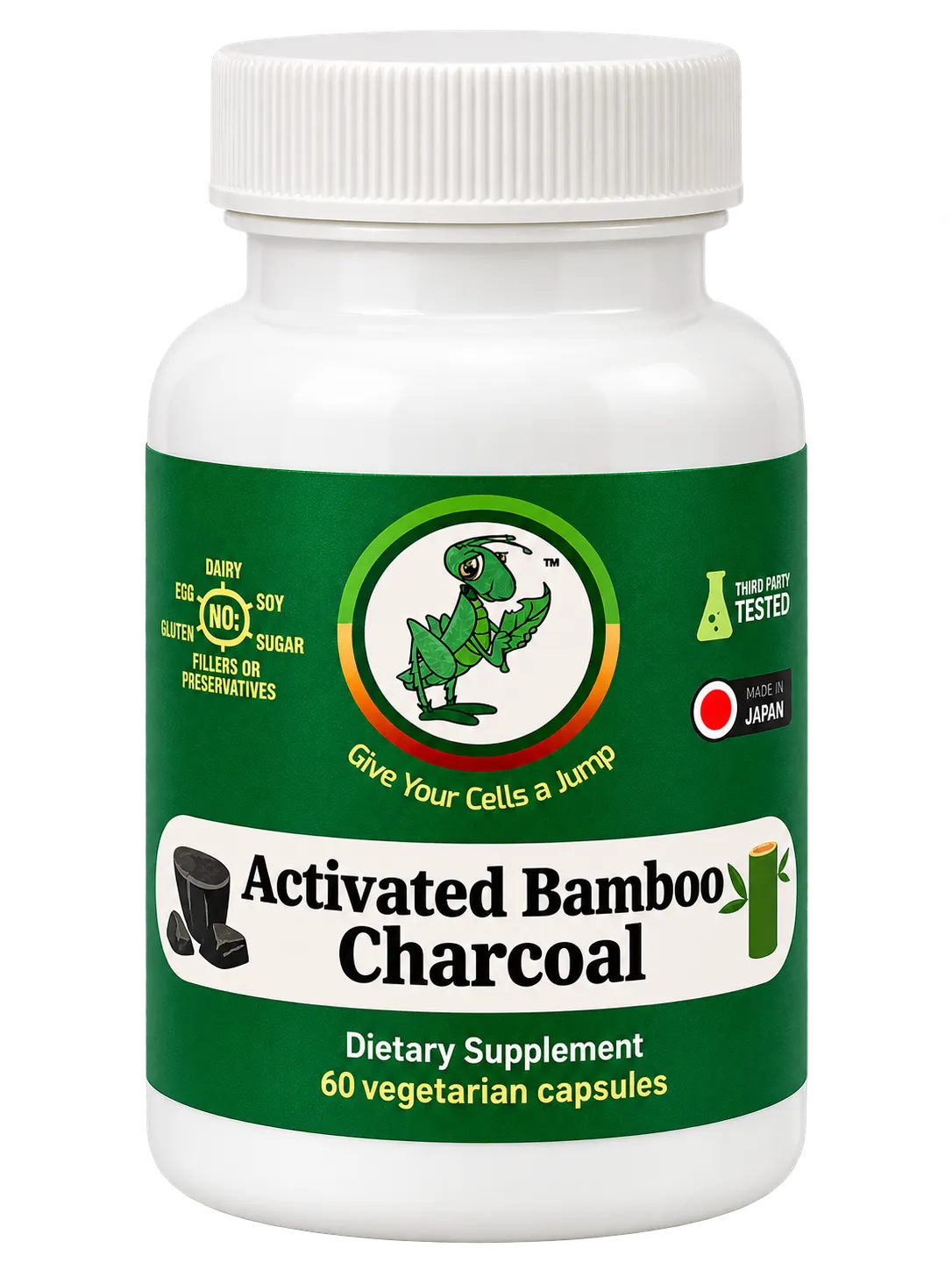
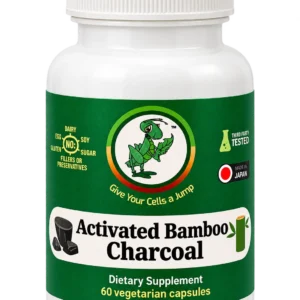
Activated bamboo charcoal
One of the varieties available on the market is activated carbon obtained from bamboo. Bamboo, like wood, coconut shells, and other organic materials, can be carbonized and then subjected to an activation process.
Bamboo charcoal is distinguished by a highly developed porous structure. A large number of small pores increases the surface area to which various chemical compounds can bind.
However, the properties of a given product are determined not only by the raw material itself, but also by the activation method, the size and distribution of pores, the purity of the preparation, and its actual adsorption capacity.
Activated bamboo charcoal may be used during cleansing treatments, for certain digestive disorders, and as an agent binding specific substances present in the digestive tract.
By adsorbing some of the compounds present in the intestines, it may reduce the amount of substances that need to be processed and excreted by the body. For this reason, it is sometimes used as a supportive element during programs aimed at relieving the burden on the liver and kidneys.
The most important safety rules
Activated charcoal causes black discoloration of the stool. This is a natural and expected effect of taking it.
In some people, larger amounts of charcoal may cause constipation. In such a case, ensure adequate hydration and monitor bowel function.
Activated charcoal may bind medications, vitamins, minerals, and other orally taken supplements to its surface. For this reason, an interval should be maintained between taking charcoal and using other preparations.
Activated charcoal should not be given to an unconscious person or to someone with severe difficulty swallowing. It should also not be given if gastrointestinal obstruction is suspected without medical assessment.
Activated charcoal should be used consciously, in the appropriate situation, and with consideration of the medications being taken and the person’s health condition. In cases of serious poisoning, severe symptoms, or chronic illness, it does not replace medical advice or professional treatment.
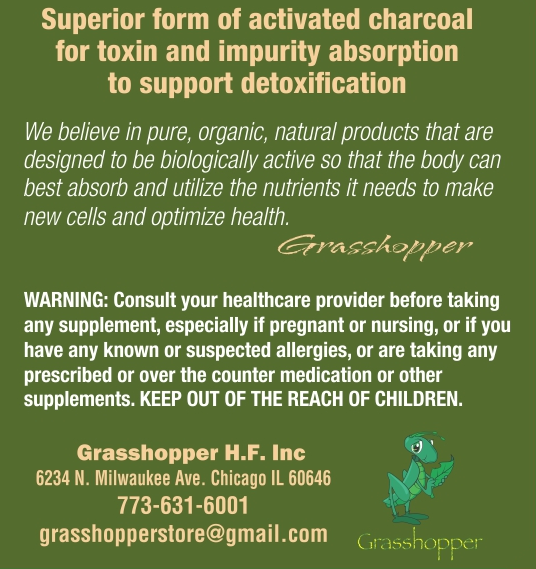
A note from the Grasshopper Pharmacy
Many people ask us why we do not use activated charcoal imported from Poland.
There are two main reasons for this.
First of all, Polish activated charcoal is very often available in tablet form, and the amount of charcoal itself contained in a single tablet is relatively small. Therefore, to take a larger portion, one has to swallow a large number of tablets, which, besides charcoal, also contain excipients necessary to form them.
The second reason is even more important to us.
The primary function of activated charcoal is adsorption, i.e. binding toxins and other undesirable substances present in the digestive tract to its surface. Therefore, it is difficult to find justification for adding titanium dioxide to such a product, referred to in English as titanium dioxide.
We do not claim that titanium dioxide is found in all tablet-form activated charcoal products available in Poland. However, you should always carefully read the product’s ingredients. If titanium dioxide appears on the label, in my personal opinion it is worth choosing a product that does not contain this ingredient.
The idea behind activated charcoal is, after all, to bind substances that we do not want in the body. Adding unnecessary colorants or other controversial ingredients therefore seems contrary to the very purpose of using it.
It can be compared to a situation in which someone takes a remedy intended to help cleanse the body and then washes it down with water drawn from a polluted lake. One action undermines the purpose of the other.
That is why, at Konik Polny Pharmacy, we choose activated charcoal in the purest form possible, without unnecessary colorants or technological additives. Before purchasing any preparation, we recommend reading the full ingredient list rather than relying solely on the product name or the information displayed on the front of the package.
Reviews
There are no reviews yet.